

Outdoor Furniture
A Guide to Finding the Right Commercial Table Top Materials
Oct
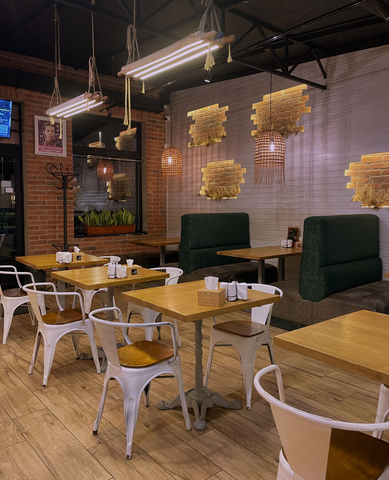
Finding the right restaurant table top can be a key factor in creating the mood and ambiance of your business. Which pieces you select will depend on considerations such as:
Are you a family-friendly burger joint or a chic vegan café?
Are you going after a high-end clientele or trying to attract sports fans to watch the big game?
The type of table top you choose can make all the difference in creating the right aesthetic for the patrons you’re attempting to attract.
There are several factors to consider when purchasing commercial table top materials, including the quality and durability of construction, the shape of the table design, and the overall theme of your restaurant. But really, nothing is more crucial in setting the tone of your space than the material that you choose for the table tops.
Below we’ve put together a guide to the leading dining table top materials for your restaurant, including a side-by-side comparison, outdoor-specific picks, and a durability ranking for high-traffic rooms.
Commercial Table Top Materials Compared
Not every material fits every setting. Here’s how the leading commercial table top materials stack up on durability, use environment, cost, and upkeep:
| Material | Durability (1-5) | Indoor / Outdoor | Cost Tier | Maintenance | Best For |
| Solid Wood | 4 | Indoor (outdoor with proper sealing) | $$$ | Moderate | Warm, upscale dining rooms |
| Veneer | 3 | Indoor | $$ | Low to moderate | Wood look at a lower price |
| Laminate | 4 | Indoor | $ | Low | High-traffic indoor, hot plates |
| Melamine | 3 | Indoor | $ | Low | Budget indoor and cafés |
| HPL (High-Pressure Laminate) | 5 | Indoor and outdoor | $$ | Very low | All-climate, high-traffic rooms |
| Granite (Real) | 5 | Indoor and outdoor | $$$$ | Low (periodic sealing) | Upscale rooms, bar tops, patios |
| Sintered Stone | 5 | Indoor and outdoor | $$$ | Very low | Modern, high-end, low upkeep |
| Stainless Steel | 5 | Indoor and outdoor | $$$ | Low | Industrial, coastal, bar tops |
| Aluminum | 4 | Outdoor-primary | $$ | Very low | Patios, lightweight stacking |
| Resin | 4 | Indoor and outdoor | $$ | Very low | Wood look at a lower price |
| Synthetic Teak / Werzalit | 4 | Outdoor-primary | $$ | Very low | Patios, waterfront, poolside |
| Composite | 4 | Indoor and outdoor | $$ | Very low | Scratch-resistant patio use |
The rest of this guide covers each material in more detail and finishes with outdoor-specific recommendations and a durability ranking for high-traffic dining rooms.
The Best Table Top Material for Your Restaurant
There are plenty of options when it comes to finding the best table top material for your bar or restaurant. It all depends on the look you’re going for, the location of the table, and the price you want to spend.
Generally speaking, however, table top material can be broken down into four categories: solid wood, stone and stainless steel, indoor laminate, and advanced synthetics.
Solid Wood
If you’re looking for an all-natural and durable table top for restaurant usage, there’s no better material than solid wood. Solid wood table tops can be found in customizable color stains and are made from a number of different types of wood, with some of the most popular being:
- Bamboo
- Oak
- Pinewood
- Fir
- Mahogany
- Beechwood
- Walnut
Hardwood trees like American Oak and Beechwood will be naturally darker and are ideal for more elegant settings, while softwoods like pine, fir, and bamboo have a lighter coloring and contribute to a more rustic ambiance. For a bolder statement piece, our black walnut live-edge solid wood table top delivers a distinctive natural edge finish. Whichever style you choose, you can be sure that commercial-grade solid wood table tops will be very durable and resistant to both scratching and moisture damage.
Veneer
Veneer gives you the look of hardwood at a more approachable price. A thin layer of real wood is bonded to a stable substrate, delivering the grain and warmth of solid wood with better dimensional stability and lower cost. Our red oak veneer table tops are one of the most popular options, and the full indoor assortment is in our commercial table tops category.
Stone & Stainless Steel
If you need a heavy-duty table that can hold up to all sorts of wear and tear, choosing a stone or stainless steel table top is what you need. Imported real solid granite table tops, for instance, are great for either indoor or outdoor usage and can provide a classic aesthetic to your bar or restaurant. If you want the look of granite at a lower price for indoor settings, our artificial granite resin tops deliver the same high-gloss finish at a fraction of the cost.
Stainless steel table tops, on the other hand, can help create a more chic-industrial vibe, either indoors or outdoors, offering great durability, water resistance, and an easy-to-clean surface. Our stainless steel table tops and brushed stainless steel dining tables are both popular picks for restaurants that want a modern finish without the maintenance of natural stone.
Sintered Stone
Sintered stone has become one of our most-recommended materials for restaurants that want a stone look without stone’s upkeep. The material is manufactured under heat and pressure to produce a dense, non-porous surface that resists scratches, stains, heat, and UV exposure. Our sintered stone table tops with metal edging work in both indoor dining rooms and covered patios and come with a sub-top installed for easy mounting.
Laminate
If you’re making a table top material list for strictly indoor use, laminate needs to be strongly considered. There are plenty of advantages to choosing a laminate table top, not the least of which is saving money and having more design flexibility. Laminates are basically a synthetic material that can take on any number of appearances, from wood to stone, to any color imaginable. Our metal edge laminate table tops pair the surface’s affordability with a durable protective trim.
Laminates are very durable and designed to be heat and scratch-resistant, making them ideal in settings with hot plates and high traffic. They’re also easy to clean and much more affordable than the solid wood and stone table tops they’re made to mimic.
Melamine
Melamine is a type of low-pressure laminate bonded to a substrate under heat. It costs less than most other indoor options, cleans easily, and resists scratches well enough for café and quick-service settings. For heavier commercial use or anywhere hot plates land directly on the surface, HPL is the better choice. Our melamine table tops come in multiple finishes for budget-conscious buildouts.
HPL (High-Pressure Laminate)
HPL is manufactured under much higher pressure than melamine, which produces a denser, far more impact- and heat-resistant surface. The material is UV-protected, water-resistant, and rated for both indoor and outdoor use, which makes it one of the most versatile picks on this list. For buildouts that need the top and base together, our complete HPL outdoor restaurant tables ship from stock in multiple colors.
Resin & Advanced Synthetics
In addition to laminate table tops, many bar and restaurant owners turn to resin and other advanced synthetics like plastic teak and Werzalit.
Resin tops are designed to simulate the look and texture of natural wood, from dark mahogany to deep cherry, and the synthetic material is resistant to both ultraviolet light, so no fading, and corrosion, making it even more durable than a solid wood table! For indoor dining rooms, our epoxy resin table tops are a popular pick that captures the look of natural wood at a lower price.
Plastic teak and Werzalit come into their own on the patio, where their waterproof, fade-resistant, and environmentally friendly construction holds up to year-round weather. Plastic teak is also sustainable and comes in a number of different colors, while Werzalit, like laminate, can be made to look like any number of restaurant table top materials. We cover both, along with every other outdoor-rated option, in the next section.
Outdoor Table Top Materials
Outdoor dining rooms ask more of a table top than indoor rooms do. The surface has to shrug off sun, rain, humidity, salt air, and the daily motion of chairs sliding in and out, all without warping, fading, or rusting.
What Makes a Table Top Outdoor-Rated
Before you commit to a material for your patio or rooftop, confirm it holds up on these five fronts:
- UV and fade resistance. The sun breaks down pigments and finishes faster than any other outdoor force.
- Moisture and freeze-thaw tolerance. Rain, humidity, and freezing temperatures all expand and contract materials. A table rated for outdoor use handles the cycling without splitting or lifting.
- Heat retention in direct sun. Dark stone and metal can get too hot to touch after an afternoon in the sun. Factor seat comfort into your material choice.
- Wind weight. Lightweight tops blow over in storms. Heavier bases and anchoring help, but the top’s own weight matters too.
- Rust and corrosion resistance. This matters most for metal frames and fasteners, especially near the coast.
Best Materials for Outdoor Table Tops
The leading outdoor table top materials in commercial use are:
- HPL (High-Pressure Laminate). UV-protected, water-resistant, and rated for all climates. Our HPL outdoor table tops are a strong default pick.
- Resin. Weatherproof, light, and available in wood-look finishes. Our commercial outdoor resin restaurant table tops are among our best sellers.
- Aluminum. Lightweight, rust-proof, and easy to move. Our aluminum outdoor table tops ship in stock and work especially well for frequent rearrangement.
- Synthetic Teak and Werzalit. Waterproof and fade-resistant, with the look of natural teak or custom patterns.
- Composite. Scratch-resistant with the look of real wood planking. Our OCS composite outdoor table top is a great alternative to maintenance-heavy hardwood outdoors.
- Granite and Sintered Stone. Heavier, more upscale, and built to last decades outdoors.
- Stainless Steel. Rust-resistant and modern-looking, with strong coastal performance.
For the full outdoor assortment, our outdoor table tops category has everything in stock and ready to ship.
Best Wood for Outdoor Table Tops
If you want real wood on your patio, teak is the answer. Teak’s natural oil content makes it weather-resistant without a sealed finish, which is why it’s been used in boatbuilding for centuries. Left untreated, teak weathers to a silvery-gray patina. Treated with teak oil or marine sealer, it holds its original golden tone. Our real teak outdoor table tops ship unfinished, so you can decide which way to go.
If teak’s upkeep sounds like more than you want to take on, synthetic teak gives you the same look with no annual sealing. For a complete breakdown of how to keep outdoor furniture looking sharp through all four seasons, see our guide on how to care for outdoor restaurant furniture.
The Most Durable Materials for Dining Table Tops
The most durable materials for a dining table top in a commercial restaurant setting are HPL, sintered stone, stainless steel, real granite, and solid hardwood. All five hold up to the five things that most commonly destroy table tops in high-traffic rooms:
- Deep scratches from plates, cutlery, and sliding glassware
- Heat damage from hot pans and plates placed directly on the surface
- Moisture rings and warping from spills left to sit
- Chemical etching from commercial sanitizers and food acids
- Impact damage from dropped items and daily use
For heavy daily use in a busy dining room, our general ranking is:
- HPL and sintered stone. Both resist all five of those damage types with very little maintenance.
- Stainless steel. Nearly indestructible and easy to clean, though it shows water spots and fingerprints.
- Real granite. Extremely long-lasting and holds up beautifully, but needs periodic sealing to prevent staining.
- Solid hardwood. Highly durable and refinishable, with the trade-off of needing periodic sealing or oiling.
What separates commercial-grade materials from residential ones comes down to construction standards, warranty terms, and service life expectations. The short version: contract-grade means engineered for daily commercial use, repeated sanitizing, and extended service life, rather than the lighter demands of a home.
For a broader look at every material category across tables, chairs, and bases, our restaurant furniture materials guide covers the whole lineup.
Frequently Asked Questions
What is the most durable table top material for restaurants?
HPL and sintered stone hold up especially well in commercial dining rooms. Both resist scratches, heat, moisture, and chemical cleaners with very little upkeep. Stainless steel and real granite also hold up to heavy daily use. The right pick depends on the setting and the aesthetic you’re after.
What is the best material for an outdoor table top?
HPL, aluminum, synthetic teak, composite, and resin are the leading outdoor table top materials for commercial patios. All five handle UV exposure, moisture, and temperature swings without warping or fading. Real teak is a strong natural choice if you don’t mind applying teak oil or marine sealer once a year.
What’s the best material for a restaurant dining table?
For indoor dining rooms, solid hardwood, HPL, and sintered stone are the most common picks. Hardwood gives you warmth and a refinable surface. HPL offers budget-friendly durability with low maintenance. Sintered stone combines a modern look with very low upkeep and high scratch and heat resistance.
Laminate vs. veneer vs. melamine: what’s the difference?
All three are affordable indoor options, but they’re made differently. Melamine is a low-pressure laminate bonded under heat. HPL (high-pressure laminate) is denser and far more impact- and heat-resistant. Veneer is a thin layer of real wood bonded to a substrate, giving you the look of hardwood at a lower price than solid wood.
Is resin a good choice for high-traffic restaurants?
Yes. Resin tops resist UV fading and corrosion, and they can match the look of natural wood at a lower price. They clean up quickly and handle commercial daily use well. Resin is widely used in both indoor dining rooms and covered outdoor patios where weather resistance matters.
What does “contract-grade” mean for table tops?
Contract-grade signals the piece was built for commercial, not residential, settings. Look for commercial-rated materials, reinforced edge banding, a stable substrate or core, and a factory warranty against defects. See our guide to contract-grade furniture for what to ask about before you buy.
Find the Right Table Top for Your Restaurant
Whatever type of table top you’re looking to incorporate into your bar or restaurant, Bistro Tables and Bases has a huge selection of solid wood, stone, stainless steel, laminate, and synthetic table tops in stock and ready to ship. We also offer bulk pricing on volume orders for full buildouts and multi-location refreshes.
Call us at 702-462-2565 or fill out a quote request to talk through your project. Our team will help you narrow the material choice to the one that fits your concept, your traffic, and your budget.
